
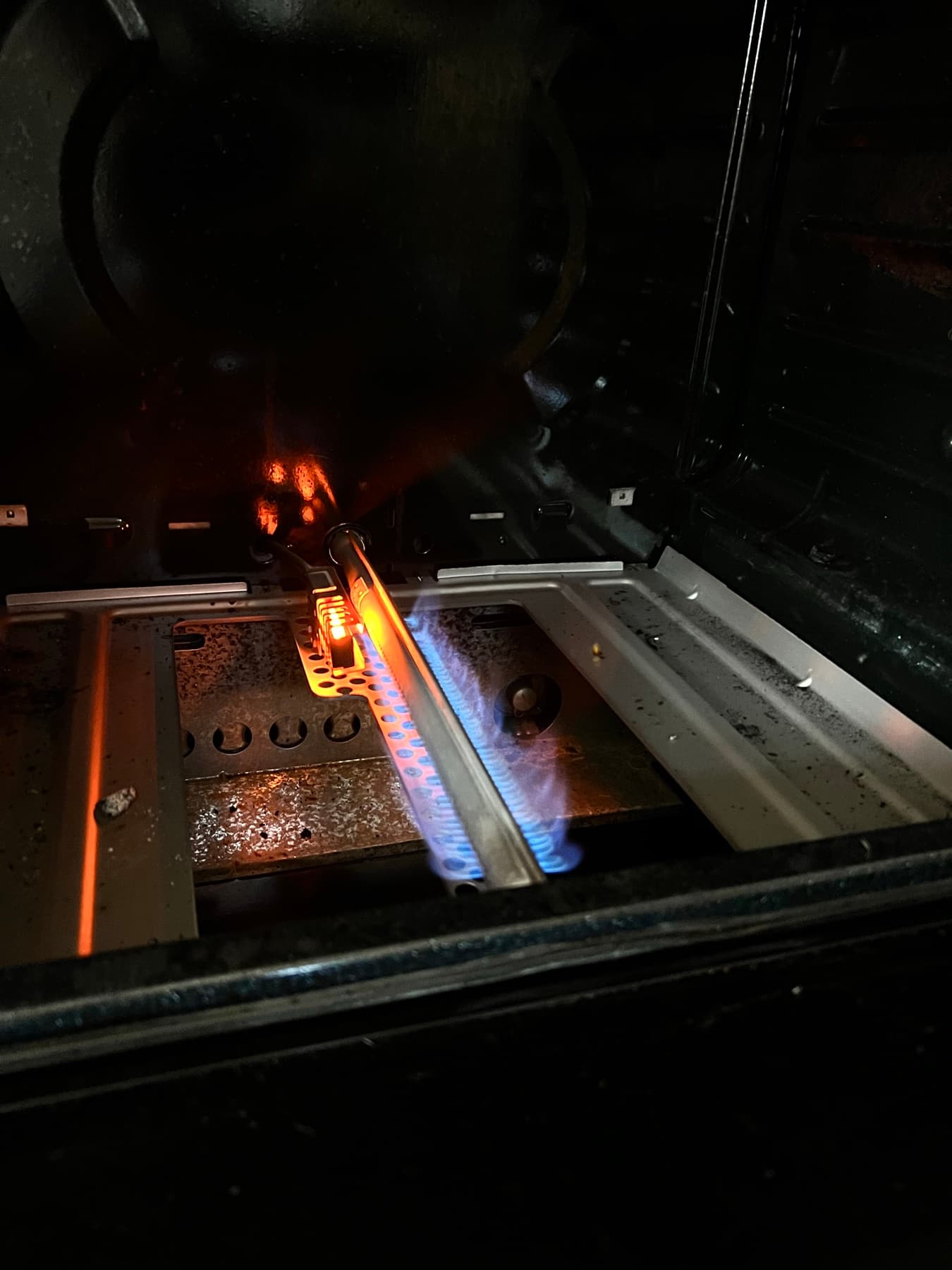
An error code narrows down what an appliance's control board detected — it doesn't identify which physical part failed. The same code can point to two or three different possible causes depending on the model, and manufacturers sometimes reuse or change code meanings between generations of the same product line.
Use this guide as a starting point: find your brand, see what the code generally indicates, and check the safe items listed before assuming a specific component needs to be replaced. If your model isn't behaving the way the general description suggests, or you're not comfortable with the safe check listed, that's a good sign to get a professional diagnosis instead of guessing further.
No error code justifies bypassing a safety device, testing live electrical components, or opening a sealed refrigeration or gas system. If a code appears alongside a burning smell, gas smell, sparking, or visible damage, stop using the appliance and treat it as a safety issue first, not a troubleshooting one.
LG
LG washers and dryers display 2-letter alphanumeric codes on the display panel.
- Typically indicates
- Drain/outlet error — the machine isn't draining within the expected time.
- Safe to check
- Check the drain hose for kinks and the drain filter (if accessible on your model) for debris.
- Does NOT necessarily mean
- A failed drain pump — a clogged filter or kinked hose produces the same code.
- Typically indicates
- Unbalanced load detected during spin.
- Safe to check
- Redistribute the load evenly and make sure it isn't a single heavy item (e.g. one towel or a comforter).
- Does NOT necessarily mean
- A mechanical fault — this is often just a load-balance issue, not a part failure.
- Typically indicates
- Motor-related error, often described as a locked-rotor condition.
- Safe to check
- None beyond confirming the drum isn't physically obstructed — this is generally not a homeowner-safe diagnostic.
- Does NOT necessarily mean
- Automatically a failed motor — wiring and control faults can also trigger it.
- Typically indicates
- Water inlet error — the machine isn't detecting water filling within the expected time.
- Safe to check
- Check that both hot and cold water supply valves are fully open and hoses aren't kinked.
- Does NOT necessarily mean
- A failed inlet valve — a partly closed supply valve is a common, unrelated cause.
- Typically indicates
- Door error — the door isn't detected as securely closed/locked.
- Safe to check
- Make sure the door is fully closed and nothing (clothing, a strap) is caught in the seal.
- Does NOT necessarily mean
- A failed door lock — debris in the door seal is a frequent, unrelated cause.
- Typically indicates
- Overflow or water level error.
- Safe to check
- None — this typically involves the water level sensing system.
- Does NOT necessarily mean
- A specific sensor failure without further diagnosis.
- Typically indicates
- Power failure was detected during a cycle.
- Safe to check
- Confirm the outlet has stable power and the machine isn't sharing a circuit prone to tripping.
- Does NOT necessarily mean
- A problem with the washer itself — this can be a household power interruption.
Samsung
Samsung washers and dryers use similar paired-letter code families across many models.
- Typically indicates
- Water supply / inlet error — insufficient water detected.
- Safe to check
- Check both supply hoses are open fully and not kinked; check inlet screens for debris if accessible.
- Does NOT necessarily mean
- A failed inlet valve — low household water pressure can also trigger it.
- Typically indicates
- Drain error — water isn't draining within the expected time.
- Safe to check
- Check the drain hose for kinks and confirm the drain filter/pump area (if user-accessible on your model) is clear.
- Does NOT necessarily mean
- A failed drain pump — obstructions are a common alternate cause.
- Typically indicates
- Door error — the door isn't detected as securely closed.
- Safe to check
- Make sure the door is fully closed and the seal is free of trapped items.
- Does NOT necessarily mean
- A failed door lock mechanism.
- Typically indicates
- Heating error — expected heating isn't being detected.
- Safe to check
- None beyond confirming the correct cycle/temperature setting was selected.
- Does NOT necessarily mean
- A single specific part — heating circuits involve several components.
- Typically indicates
- Depending on model, LC often relates to a leak sensor, LE to a motor error.
- Safe to check
- Check for visible standing water near the base if LC; no safe check for LE.
- Does NOT necessarily mean
- The same fault on every model — this code pair is used inconsistently across Samsung's lineup, so check your manual.
Whirlpool
Whirlpool washers commonly use F#E# (fault/error) paired codes.
- Typically indicates
- Long drain time — the machine is taking too long to drain.
- Safe to check
- Check the drain hose for kinks and make sure it isn't installed higher than the manufacturer's specified height.
- Does NOT necessarily mean
- A failed drain pump — hose installation issues are a frequent cause.
- Typically indicates
- Door lock error.
- Safe to check
- Make sure the door is fully closed and nothing is obstructing the latch.
- Does NOT necessarily mean
- A failed door lock assembly.
- Typically indicates
- Door unlock error — the machine can't confirm the door has unlocked.
- Safe to check
- Wait a few minutes after cycle end before trying to open — some models have a delay.
- Does NOT necessarily mean
- A part failure — some door-lock delays are normal by design.
- Typically indicates
- Water flow / flow meter error — insufficient fill detected.
- Safe to check
- Check both supply valves are fully open.
- Does NOT necessarily mean
- A failed flow meter or inlet valve without further checks.
- Typically indicates
- Overfill condition detected.
- Safe to check
- None beyond confirming the correct cycle was selected — this is a safety-related code.
- Does NOT necessarily mean
- A specific part failure without inspection.
Bosch
Bosch dishwashers display E-prefixed numeric codes.
- Typically indicates
- Water detected in the base pan (Aquastop leak sensor triggered).
- Safe to check
- Check underneath and around the unit for visible water or a loose hose connection.
- Does NOT necessarily mean
- A major leak — even a small amount of condensation can trigger this safety feature.
- Typically indicates
- Drain error.
- Safe to check
- Check the drain hose for kinks and, if connected through a garbage disposal, confirm the knockout plug was removed at install.
- Does NOT necessarily mean
- A failed drain pump — blockages are a common alternate cause.
- Typically indicates
- Drain pump blockage detected.
- Safe to check
- Check the filter at the bottom of the tub for debris.
- Does NOT necessarily mean
- A failed pump motor — debris blockage is the more common cause.
- Typically indicates
- Heating error.
- Safe to check
- None beyond confirming a normal cycle was selected.
- Does NOT necessarily mean
- A single specific failed part without inspection.
GE
GE washers commonly use flash-count codes (the status light blinks a number of times) rather than alphanumeric displays, and GE refrigerators typically require a button-press sequence to reveal diagnostic codes. Because GE's system varies significantly by model and appliance type, check your specific model's manual or the GE Appliances support site rather than relying on a generic list.
Frigidaire
Frigidaire washers and dishwashers commonly use short alphanumeric codes. These are the ones most consistently documented across Frigidaire's product lines, but confirm against your model's manual before assuming a specific meaning.
Commonly documented codes — verify against your specific model before relying on this.
- Typically indicates
- Washer fill time exceeded — taking too long to reach the expected water level.
- Safe to check
- Check both supply valves are fully open and hoses aren't kinked.
- Does NOT necessarily mean
- A failed inlet valve — low water pressure is a common alternate cause.
- Typically indicates
- Washer drain error or clogged pump filter.
- Safe to check
- Check the drain hose for kinks and the pump filter (if accessible on your model) for debris.
- Does NOT necessarily mean
- A failed drain pump without checking for obstructions first.
- Typically indicates
- Washer door/lid lock error.
- Safe to check
- Make sure the door is fully closed and the seal is clear of trapped items.
- Does NOT necessarily mean
- A failed lock mechanism.
- Typically indicates
- Dishwasher electronic control system error.
- Safe to check
- None beyond a power cycle per the owner's manual.
- Does NOT necessarily mean
- A specific failed part without further diagnosis.
Electrolux
Electrolux washers and dryers commonly use E-prefixed codes. These are the ones most consistently documented, but Electrolux shares some platforms with Frigidaire, and exact meanings can shift between models.
Commonly documented codes — verify against your specific model before relying on this.
- Typically indicates
- Washer water inlet error — insufficient water detected.
- Safe to check
- Check both supply valves are open and hoses aren't kinked or clogged.
- Does NOT necessarily mean
- A failed inlet valve without checking the water supply first.
- Typically indicates
- Washer drainage error.
- Safe to check
- Check the drain hose for kinks or blockage.
- Does NOT necessarily mean
- A failed drain pump.
- Typically indicates
- Door not closed or not detected as locked (washer or dryer).
- Safe to check
- Confirm the door is fully closed and the seal is clear.
- Does NOT necessarily mean
- A failed door switch.
- Typically indicates
- Dryer temperature sensor (NTC) related fault.
- Safe to check
- None beyond confirming a normal cycle was selected — this is not a homeowner-safe diagnostic.
- Does NOT necessarily mean
- A single specific part without inspection.
Maytag
Maytag washers use short text-style codes (front-load and top-load HE models differ), and dryers use short alphanumeric codes. These are documented directly on Maytag's own product-help site, but always confirm against your model.
Commonly documented codes — verify against your specific model before relying on this.
- Typically indicates
- Excess suds detected during the wash cycle.
- Safe to check
- Use HE-rated detergent in the recommended amount going forward; run a rinse cycle if suds are visibly excessive.
- Does NOT necessarily mean
- A mechanical fault — this is almost always a detergent amount/type issue.
- Typically indicates
- Control lock is active — the panel is intentionally locked.
- Safe to check
- Press and hold the control lock button (check your manual for the exact button) to disable it.
- Does NOT necessarily mean
- An error at all — this is a feature, not a fault.
- Typically indicates
- Power failure was detected during a cycle.
- Safe to check
- Confirm the outlet has stable power.
- Does NOT necessarily mean
- A problem with the washer itself.
- Typically indicates
- Dryer: restricted airflow detected.
- Safe to check
- Clean the lint filter and check the exterior vent hood and duct run for blockage.
- Does NOT necessarily mean
- A failed component — this is specifically an airflow-restriction code by design.
- Typically indicates
- Dryer: drive belt broken or off the pulley.
- Safe to check
- None beyond listening for an unusual motor sound with no drum movement.
- Does NOT necessarily mean
- Guaranteed belt failure without inspection, though this code is fairly specific.
- Typically indicates
- Dryer: door opened during a cycle.
- Safe to check
- Make sure the door is fully closed and restart the cycle.
- Does NOT necessarily mean
- A fault — this can simply mean the door was opened intentionally or bumped.
Frequently Asked Questions
No. Error codes indicate what the control board detected — like insufficient water flow or a door not confirmed closed — which can have several different causes, from a simple installation issue to an actual component failure. The code narrows the search; it doesn't complete the diagnosis.
Not sure what your code means on your model?
A technician can confirm what's actually happening before anything gets replaced.