
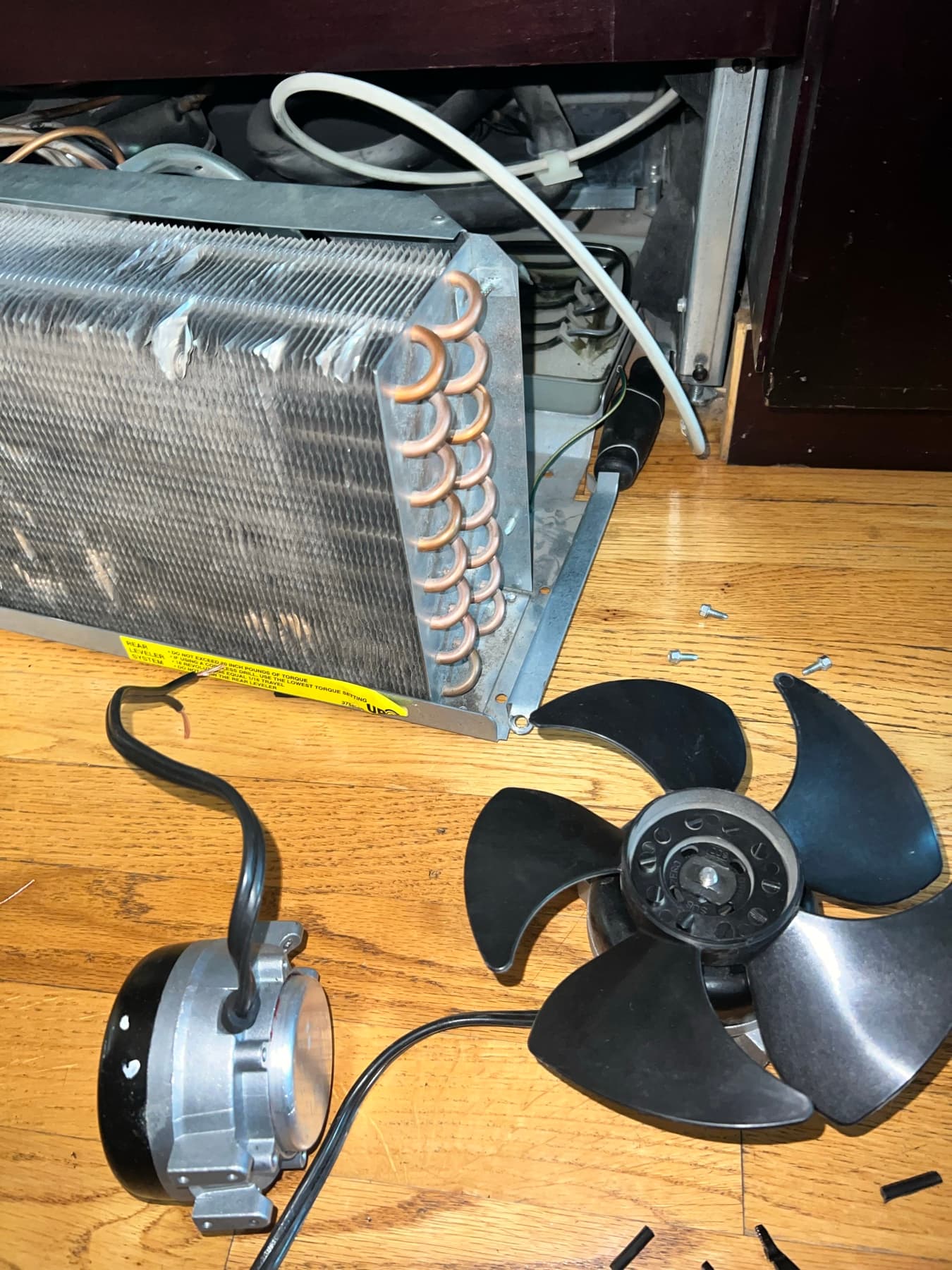
The compressor is the single most important component in your refrigerator's cooling system. It pressurizes refrigerant and pushes it through the coils, and when it starts to fail, the symptoms are often subtle at first — a slightly warmer fridge, an odd sound, a slightly higher energy bill. Catching the signs early can mean the difference between a straightforward repair and a full loss of your food.
1. The refrigerator runs constantly and never cycles off
A healthy compressor cycles on and off in intervals throughout the day. If yours seems to be running nonstop, it may be struggling to reach the set temperature — a sign the compressor is losing efficiency or the sealed system has a refrigerant leak.
2. Loud buzzing, clicking, or knocking sounds
Some compressor noise is normal, but a loud buzz, repetitive clicking, or a knocking sound (especially one that starts and stops with the compressor cycle) usually indicates internal wear or a failing start relay.
3. The refrigerator is warm but the compressor feels hot to the touch
If you reach behind the refrigerator and the compressor housing feels excessively hot, it may be overworking itself trying to compensate for a leak or restriction elsewhere in the sealed system.
4. Your energy bill has crept up without explanation
A struggling compressor draws more current to do the same job. If you haven't changed your usage habits but notice a steady increase in your electric bill, it's worth having your refrigerator's compressor tested.
5. Freezer is fine, but the fridge compartment is warm (or vice versa)
This uneven cooling pattern often points to a compressor or sealed-system issue rather than a simple thermostat problem, especially if it develops gradually rather than suddenly.
What to do if you suspect compressor failure
Compressor diagnosis requires amp draw testing and refrigerant pressure readings — not something you can reliably determine by ear. If you're seeing two or more of the signs above, it's worth scheduling a diagnostic visit before the unit fails completely and you lose a refrigerator full of food.
- Unplug the unit if you notice a burning smell — don't wait for a service appointment.
- Clear the area around the compressor and condenser coils of dust and debris.
- Note when the symptoms started and whether they're getting worse.
- Have your model number ready when you call for service.