
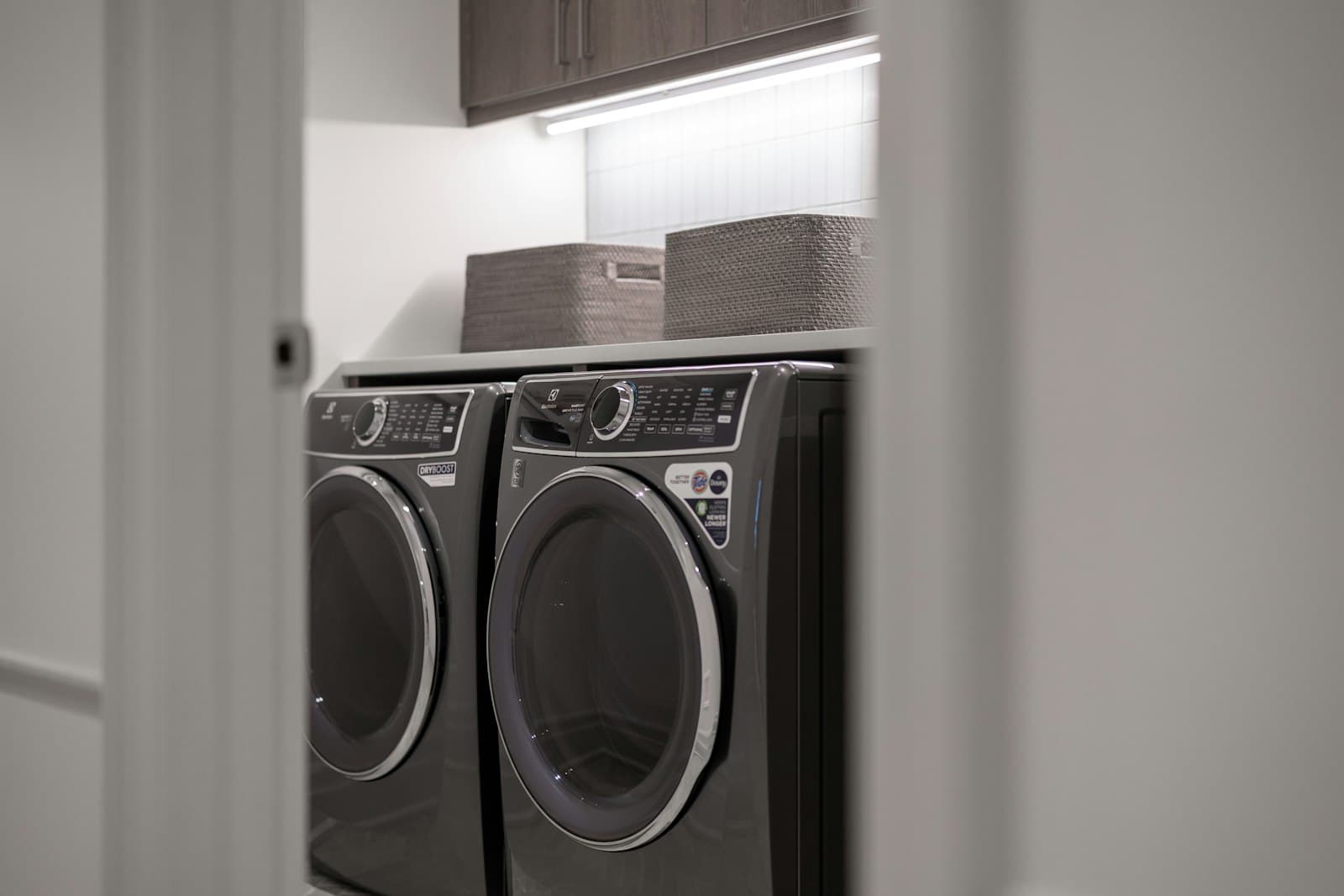
Grinding, banging, squealing, and thumping all mean different things. The trick is paying attention to exactly when the noise happens and what it sounds like, not just that it's loud.
Quick Diagnosis
The washer is making a noise that's louder or different than what's normal for your machine.
Note exactly when the noise happens — during fill, during the wash/agitation step, or during spin — and what it sounds like.
Grinding, banging, squealing, rattling, and humming are five different clues pointing toward five different areas of the machine.
A steady grinding during spin that's gotten louder over several weeks points differently than a sudden banging that only happens with one particular load.
Check for foreign objects in the tub and pump, confirm the load is balanced, and check that the machine is level — all safe, all covered below.
If you smell burning rubber, the grinding is getting rapidly worse, or the noise is paired with a leak, stop and call for service.
What Can Cause This Problem?
Unbalanced load
A load that's shifted to one side of the drum — often a single heavy item like a comforter or a wad of jeans — causes the drum to strike the cabinet or wobble noticeably during spin, producing a loud, repetitive thumping or banging that's tied directly to spin speed.
Small foreign objects in the tub or pump
Coins, an underwire, a bra hook, buttons, or a bobby pin left in a pocket can rattle around loudly against the drum during agitation, or lodge in the pump and produce a grinding or clicking sound specifically during the drain step.
Washer not level on the floor
If the machine's feet aren't adjusted so all four sit firmly and evenly on the floor, the whole cabinet can rock and bang against itself or nearby surfaces during spin, even with a perfectly balanced load — this is one of the most overlooked and easiest to fix causes of a noisy washer.
Worn suspension springs, shocks, or dampers
Front-load washers (and some top-loaders) suspend the tub on springs and shock absorbers that let it move as the load shifts during spin. When these wear out or a spring detaches, the tub swings more freely than it should, producing loud banging against the cabinet during spin, often worse with heavier loads.
Worn or loose drive belt (belt-driven top-load models)
A belt that's stretched, glazed, or slightly misaligned on its pulleys can produce a high-pitched squeal, most noticeable during agitation or as the drum accelerates into spin, and often worsens gradually as the belt continues to wear.
Drain pump obstruction or pump wear
A rattling or grinding sound concentrated specifically during the drain step, rather than throughout the whole cycle, points toward either something caught in the pump impeller or the pump's own bearing beginning to wear out.
Worn tub bearing
The bearing supports the tub as it spins and sits behind the tub seal. As it wears, it produces a low grinding or rumbling sound that's usually loudest during spin and tends to get noticeably louder over the course of several weeks rather than appearing all at once. Confirming this and replacing the bearing typically requires removing the drum — a significant repair that's often evaluated against the cost of a new machine.
What to Check First
Load balance and distribution
SAFE FOR MOST HOMEOWNERS- How to check it
- Open the washer mid-cycle (if safe to pause) or before starting and look at how the clothes are arranged around the drum.
- What the result may mean
- Unbalanced loads produce a loud, repetitive banging tied directly to spin speed, and usually stop with a rebalanced load.
- Normal
- Items spread evenly around the drum.
- Abnormal
- A single heavy item or most of the load bunched to one side.
Foreign objects in the tub
SAFE FOR MOST HOMEOWNERS- How to check it
- Run your hand around the inside of the drum and check the door gasket fold (front-load) for anything hard or metallic.
- What the result may mean
- Loose objects rattling against the drum or lodged in the pump are one of the most common sources of a sudden new noise.
- Normal
- Nothing loose found.
- Abnormal
- Coins, hooks, buttons, or other small hard items found in the drum or gasket fold.
Washer level on the floor
SAFE FOR MOST HOMEOWNERS- How to check it
- Place a level on top of the machine front-to-back and side-to-side, and check that all four feet sit firmly without rocking when you press down on each corner.
- What the result may mean
- An unlevel washer can bang against itself or the wall during spin regardless of how balanced the load is.
- Normal
- The machine is level and doesn't rock at any corner.
- Abnormal
- The machine rocks noticeably at one or more corners, or the level shows a clear tilt.
Noise timing within the cycle
SAFE FOR MOST HOMEOWNERS- How to check it
- Listen through a full cycle and note specifically whether the noise happens during fill, agitation/wash, or spin.
- What the result may mean
- Noise tied specifically to spin points toward balance, suspension, or bearing; noise during agitation points more toward a belt or the agitator assembly; noise during drain points toward the pump.
- Normal
- N/A — this is a diagnostic observation, not a pass/fail check.
- Abnormal
- N/A
Noise character
SAFE FOR MOST HOMEOWNERS- How to check it
- Note whether the sound is a grinding/rumbling, a sharp banging, a high-pitched squeal, or a rattle.
- What the result may mean
- Grinding suggests a bearing or pump wear issue, banging suggests balance or suspension, squealing suggests a belt, and rattling suggests a loose object.
- Normal
- N/A
- Abnormal
- N/A
Drum rotation by hand
SAFE FOR MOST HOMEOWNERS- How to check it
- With the machine unplugged and empty, reach in and rotate the drum by hand in both directions.
- What the result may mean
- Resistance or grinding felt by hand, separate from running the machine, points toward a bearing or mechanical wear issue rather than something load-related.
- Normal
- The drum turns smoothly with light, even resistance.
- Abnormal
- Grinding, roughness, or noticeable resistance as it turns.
Suspension springs and shocks (visual, front-load)
ADVANCED — BETTER FOR A TECHNICIAN- How to check it
- With the machine unplugged, remove the top or rear panel per your model's manual and look at the springs or shock absorbers connecting the tub to the cabinet.
- What the result may mean
- Worn or detached suspension components let the tub swing more than designed, producing loud banging during spin.
- Normal
- Springs and shocks are intact, properly attached, and show no rust or excessive wear.
- Abnormal
- A detached spring, visible rust/corrosion, or a shock that moves with little to no resistance.
Belt condition (top-load, belt-driven models)
ADVANCED — BETTER FOR A TECHNICIAN- How to check it
- With the machine unplugged, access the belt per your owner's manual and check its tension and surface condition.
- What the result may mean
- A worn belt commonly produces a squealing sound, especially as the drum accelerates.
- Normal
- The belt is snug on both pulleys with no glazing or cracking.
- Abnormal
- The belt is loose, glazed/shiny, cracked, or slightly off its pulley track.
Step-by-Step Checks
1. Stop and redistribute the load if it's spin-related banging
Pause the cycle, open the washer, and spread the clothes evenly around the drum. Avoid washing a single bulky item alone — pair it with a towel or two — and restart the cycle to see if the banging stops.
2. Check the drum and gasket for anything loose
Run your hand carefully around the inside of the drum and along the fold of the door gasket (front-load models) checking for coins, hooks, buttons, or other small hard items. Make checking pockets before washing a habit going forward, and consider a mesh bag for small items like bras.
3. Confirm the washer is level
Place a level on top of the machine in both directions. If it's off, adjust the leveling feet (usually by loosening a lock nut, turning the foot, then retightening the nut) until the machine sits flat and doesn't rock when you press down on any corner.
4. Run an empty cycle to isolate mechanical noise
With nothing in the drum, run a full wash-and-spin cycle and listen closely. If the noise still happens with nothing in the machine, it rules out the load entirely and points toward a mechanical source like the pump, bearing, belt, or suspension.
5. Note exactly when the noise happens
Listen through fill, wash/agitation, and spin separately, and write down which step (or steps) the noise occurs in, along with whether it's a grinding, banging, squealing, or rattling sound. This detail narrows the diagnosis significantly before any panel needs to come off.
6. Rotate the drum by hand to feel for grinding (unplugged)
With the machine unplugged and empty, reach into the drum and turn it by hand in both directions. It should move smoothly with light resistance. Roughness or grinding felt this way, independent of the load or motor, points toward a bearing issue worth describing specifically to a technician.
Look, Listen, Observe
look
- Rust or visible wear on suspension springs after removing the top panel — Indicates the suspension system has degraded enough to contribute to banging during spin.
- Coins, hooks, or debris found in the drain filter or pump area — Confirms a foreign object was the source of a rattling or grinding sound tied to the drain step.
listen
- A low grinding or rumbling sound during spin that's gotten louder over several weeks — A classic pattern for a worn tub bearing — this tends to develop gradually rather than appearing suddenly.
- Loud, repetitive banging or thumping only during spin — Most often an unbalanced load or worn suspension springs/shocks letting the tub swing too freely.
- A rattling or clinking sound throughout the cycle — Suggests a foreign object loose in the tub or caught in the pump area.
- A high-pitched squeal during agitation or as spin ramps up (top-load) — Commonly points toward a worn or slipping drive belt.
- A humming or buzzing sound with the drum not moving at all — Points toward the motor or pump rather than anything happening inside the drum itself.
observe
- The noise happens only with heavier loads, not with a small test load — Points toward balance sensitivity rather than a failed mechanical component.
- The noise happens even with the drum completely empty — Rules out load and balance entirely, pointing toward the bearing, pump, belt, or suspension instead.
Easy Things You Can Try
- Redistribute or reduce the load — Spread clothes evenly around the drum and avoid washing a single bulky item alone.
- Level the washer — Adjust the feet so the machine sits flat and doesn't rock at any corner — this alone resolves a surprising number of noise complaints.
- Check pockets and use a mesh bag for small items — Remove coins and hard items before washing, and use a mesh laundry bag for bras, hooks, and other small items prone to escaping.
- Clear debris from the drain filter and pump area — Remove any lodged coins or debris that could be causing a rattle or grinding during the drain step.
- Run an empty test cycle — Confirm whether the noise persists with no load at all, which helps you and a technician narrow the cause faster.
Technician Tips
A grinding or rumbling noise that's gradually gotten louder over the course of several weeks, especially loudest during spin, is the signature pattern of a worn tub bearing — it's rarely sudden, and that gradual buildup is itself a useful diagnostic clue.
Banging that only happens during spin and only with certain loads usually means balance; banging that happens during spin even with a well-balanced or empty load points more toward worn suspension springs or shocks letting the tub move too freely.
Checking that the washer is level is one of the first things worth doing before assuming anything mechanical has failed — an unlevel machine can produce loud banging that has nothing to do with bearings, belts, or the load at all.
Running the machine empty is one of the fastest ways to separate a load-related noise from a genuinely mechanical one — if it's still loud with nothing inside, that tells you immediately to stop suspecting the laundry and start suspecting the machine itself.
Diagnostic Tricks
- SAFE FOR MOST HOMEOWNERS
Run a full cycle completely empty, no clothes and no detergent, and listen for whether the noise is still present — this single test separates load-related noise from a mechanical issue faster than anything else.
- SAFE FOR MOST HOMEOWNERS
With the machine unplugged, rotate the drum by hand in both directions and feel (not just listen) for roughness or grinding resistance, which can point toward bearing wear even before it's loud enough to hear clearly during operation.
- SAFE FOR MOST HOMEOWNERS
Place a level on top of the cabinet and press down on each corner one at a time — a corner that gives noticeably more than the others tells you the feet need adjustment before you look at anything more involved.
- ADVANCED — BETTER FOR A TECHNICIAN
Removing the top or rear panel to visually inspect the suspension springs, shocks, and belt directly is far more conclusive than guessing from sound alone, but involves partial disassembly and reassembly best handled by someone comfortable with it.
Error Codes
Many washers show a code for this on the display. Codes vary significantly by brand and model, so check yours against the manufacturer's manual, or see our [Appliance error code guide](/blog/appliance-error-codes) for commonly documented codes. Appliance error code guide.
Can I Fix This Myself?
Redistributing the load, checking pockets and the drum for foreign objects, and leveling the washer's feet are all safe for any homeowner and resolve a large share of noise complaints.
Removing a top or rear panel to inspect suspension springs, shocks, or a drive belt directly takes some comfort with disassembly and correct reassembly.
A confirmed or suspected worn tub bearing requires removing the drum to access and replace, a significant repair that's worth weighing against the cost of a replacement machine.
What Not to Do
- Don't ignore a grinding noise hoping it will go away — bearing wear tends to get worse over time and can eventually cause further damage to the tub if left unaddressed.
- Don't keep running heavy, unbalanced loads repeatedly once you notice banging — continuing to stress a worn suspension system can accelerate the wear.
- Don't spray WD-40 or similar lubricants into the pump or bearing area hoping to quiet a noise — this doesn't address worn components and can damage seals meant to keep water out of places it shouldn't be.
- Don't remove the rear or top panel while the machine is plugged in — always disconnect power first before reaching near the motor, pump, or suspension components.
When to Stop Troubleshooting
- You smell burning rubber or anything electrical along with the noise.
- A grinding noise is getting noticeably worse from one wash to the next.
- The noise is accompanied by a leak or water appearing where it shouldn't.
- You see smoke or sparks from the machine.
- You've ruled out load balance, foreign objects, and leveling, and the noise persists.
Don't Replace Parts Yet
A loud washer can point to several genuinely different components — an unbalanced load, a foreign object, an unlevel machine, worn suspension parts, a slipping belt, or a worn tub bearing — and several of these can produce sounds that are hard to tell apart without paying close attention to exactly when the noise happens and what it sounds like. Replacing suspension springs or a bearing before confirming the cause through the timing and character of the noise often means paying for a repair that doesn't actually fix what's making the sound. Working through load, level, and foreign objects first, then listening carefully for when the noise occurs, is what actually narrows it down.
Frequently Asked Questions
A grinding or rumbling sound that's loudest during spin and has gradually gotten louder over several weeks is a common sign of a worn tub bearing, though it's worth ruling out a foreign object in the pump first since that can produce a similar sound.
Still not sure what's causing the problem?
Professional diagnosis can help identify the actual cause before replacing parts unnecessarily.