
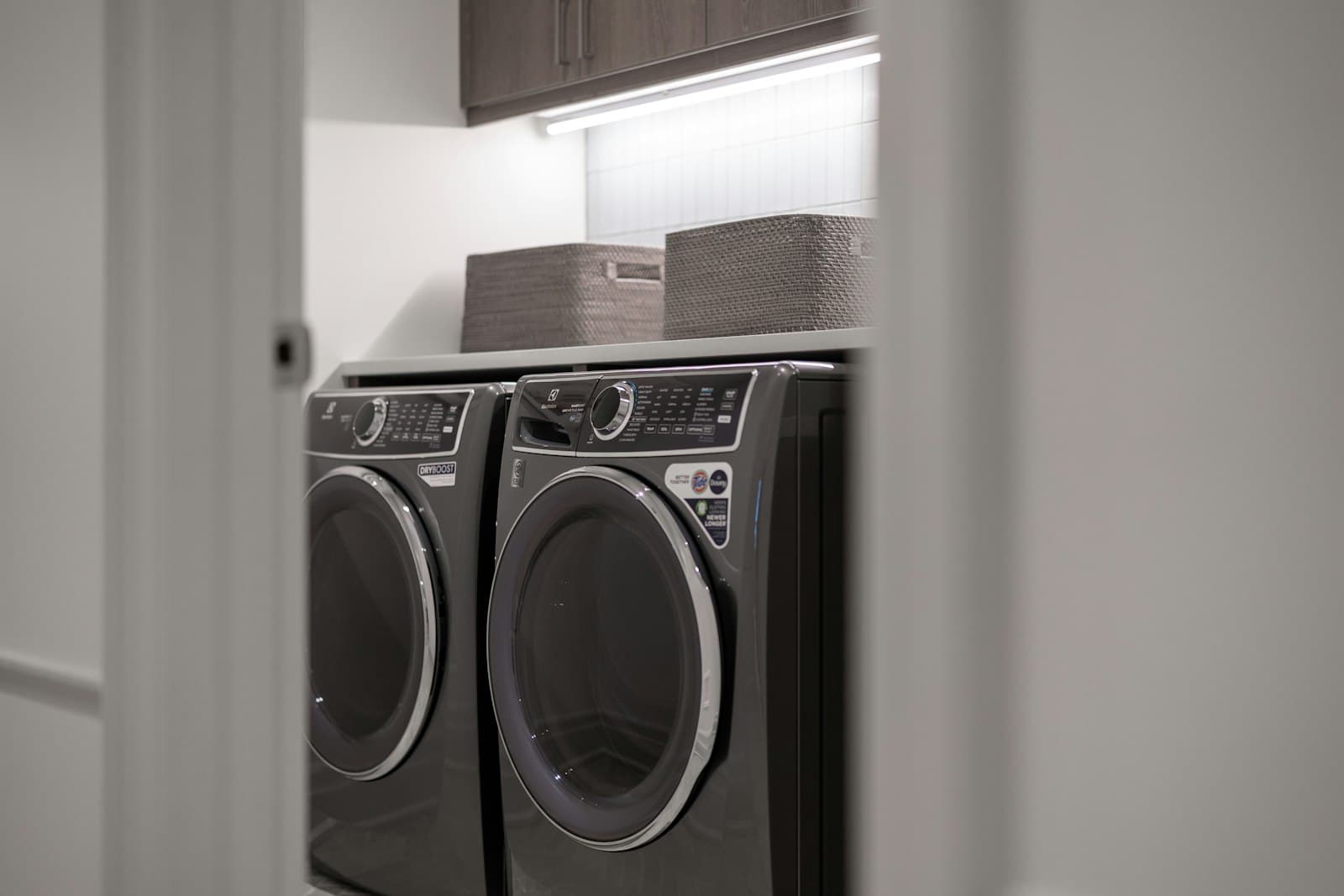
Water sitting in the drum at the end of the cycle almost always traces back to the drain hose, the filter, or the pump. Here's how to find out which one, safely.
Quick Diagnosis
The cycle finishes (or stalls) with standing water left in the drum instead of draining out.
Open the drain filter, if your model has one, over a shallow pan and see what's trapped inside.
Listen during the drain step. A humming or whirring pump sound with no water actually moving is different from total silence.
Pump running but water not moving usually points to a clog somewhere between the tub and the drain hose. Total silence from the pump points more toward an electrical or motor issue.
Check the drain hose for kinks, clean the filter, and confirm the hose isn't pushed too far into the standpipe — all safe, all covered below.
If you see water anywhere near the power cord or outlet, or the pump area smells like burning rubber or electronics, stop and call for service.
What Can Cause This Problem?
Kinked or crushed drain hose
The corrugated drain hose runs from the back of the washer to a standpipe, utility sink, or floor drain. If the washer has been pushed too close to the wall, or the hose got twisted during a move, water has to fight through a narrowed or fully pinched section — sometimes it trickles through slowly, sometimes it doesn't move at all.
Clogged drain filter or pump trap
Most washers have a small access filter near the bottom front of the cabinet that catches lint, coins, hair ties, and small debris before it reaches the pump. Once that filter packs full, water can't pass through it, and the machine ends up trying to drain through a plugged strainer — this is one of the single most common reasons for this exact complaint.
Small object lodged in the pump impeller
Items that make it past the filter — a bra underwire, a bobby pin, a button — can wedge directly against the pump's impeller blades. The pump motor may still run and hum, but the blades can't spin freely enough to actually push water out, which is why you sometimes hear the pump working with nothing happening.
Drain hose pushed in too far or improperly connected
If the drain hose is inserted too deep into a standpipe, it can create a seal that causes siphoning — water gets pulled back into the tub as fast as it drains, or drainage becomes inconsistent. The hose should form a loose loop into the standpipe, not a tight, deep seal, and the standpipe itself needs to be at the height specified for your model.
Oversudsing from too much or the wrong detergent
Excess suds — especially from using regular detergent in a high-efficiency machine — can trick the machine's pressure sensor into thinking the tub is fuller than it is, or physically interfere with the pump's ability to move water efficiently. This tends to show up gradually as detergent habits build up residue in the system.
Drain pump motor wearing out
Pump motors don't always fail all at once. A pump that's wearing out mechanically may run weaker than it used to, draining slowly instead of not at all, or working on some cycles and struggling on others. This tends to get gradually worse over several weeks rather than appearing overnight.
Pump motor failure or a control board/wiring fault
If the pump gets no power at all — due to a failed motor winding, a bad wire connection, or the control board not sending the signal to drain — there will be no pump sound whatsoever during the drain step. Confirming this requires testing the pump's electrical continuity and the control board's output, which means a meter and technician-level diagnostics, not guesswork.
What to Check First
Drain hose routing
SAFE FOR MOST HOMEOWNERS- How to check it
- Pull the washer out (unplugged) enough to see the full length of the drain hose from the machine to the wall connection.
- What the result may mean
- Even a partial kink can be enough to slow or stop drainage, especially as lint builds up at the pinch point.
- Normal
- The hose runs in a smooth curve with no sharp bends or flat spots.
- Abnormal
- The hose is kinked, crushed against the wall, or looped tightly enough to pinch itself.
Drain filter condition
SAFE FOR MOST HOMEOWNERS- How to check it
- Locate the small access door near the bottom front of the cabinet (front-load models) or the filter housing (varies on top-load models), place a shallow pan underneath, and unscrew the filter slowly — water will come out.
- What the result may mean
- A clogged filter is one of the most common reasons water won't leave the drum at all.
- Normal
- The filter is mostly clear, maybe a small amount of lint.
- Abnormal
- The filter is packed with lint, hair, coins, or small debris.
Drain hose connection height and depth
SAFE FOR MOST HOMEOWNERS- How to check it
- Check how far the hose is inserted into the standpipe or utility sink, and confirm the standpipe height matches your washer's manual (commonly 30–96 inches, model-dependent).
- What the result may mean
- An overly tight seal can cause siphoning, where drained water gets pulled back into the tub.
- Normal
- The hose sits loosely in the standpipe with an air gap, not jammed in tightly.
- Abnormal
- The hose is pushed in deep enough to form a tight seal, or the standpipe is too short or too tall for the model.
Pump sound during the drain step
SAFE FOR MOST HOMEOWNERS- How to check it
- Start a drain or spin cycle and listen near the front-bottom of the machine.
- What the result may mean
- Humming with no water movement usually means the pump motor is running but something is physically blocking it. Silence usually means the pump isn't getting power at all.
- Normal
- A steady whirring or humming sound that corresponds with water actually leaving the tub.
- Abnormal
- A hum or buzz with no water movement, a rattling sound, or complete silence.
Standing water level and drainage speed
SAFE FOR MOST HOMEOWNERS- How to check it
- After a stalled or finished cycle, look at how much water is left and whether it's slowly receding or completely static.
- What the result may mean
- Slow draining often points to a partial obstruction (like a partially clogged filter), while zero drainage points toward a full blockage or pump failure.
- Normal
- No standing water, or water that drains within a minute or two of starting the cycle.
- Abnormal
- A full tub of standing water that hasn't moved in 20+ minutes, or water that drains extremely slowly over an hour.
Detergent amount and type
SAFE FOR MOST HOMEOWNERS- How to check it
- Check how much detergent you're using against the manufacturer's recommended amount, and confirm it's labeled HE if your washer is high-efficiency.
- What the result may mean
- Oversudsing can interfere with drain sensing and pump performance over time, especially with repeated buildup.
- Normal
- Using the recommended amount of HE detergent for the machine.
- Abnormal
- Regularly using more than recommended, or using non-HE detergent in an HE washer.
Pump impeller obstruction
ADVANCED — BETTER FOR A TECHNICIAN- How to check it
- With the filter removed and the machine unplugged, shine a flashlight into the filter opening and look for anything visibly wedged against the impeller.
- What the result may mean
- A jammed impeller explains a pump that hums but can't move water — this is often fixable by simply removing the object.
- Normal
- The impeller area is clear and, where visible, moves freely.
- Abnormal
- A visible object (coin, underwire, button) is jammed against the blades.
Pump motor electrical function
DO NOT ATTEMPT- How to check it
- Testing for continuity and correct voltage at the pump motor connector requires a multimeter and the machine's wiring diagram.
- What the result may mean
- If the pump is confirmed clear of obstructions but still won't run, the motor windings or the control board output need electrical testing to confirm the failure point.
- Normal
- N/A
- Abnormal
- N/A
Step-by-Step Checks
1. Clean the drain filter first
Place towels and a shallow pan under the filter access door, usually a small flip-down panel near the bottom front corner of the machine. Turn the filter cap slowly counter-clockwise — water will drain out as you do, so go slow. Once removed, pull out anything lodged in it (coins, lint, hair ties, small socks) and check that the impeller behind it isn't blocked. Rinse the filter and reseat it firmly.
2. Straighten and check the drain hose
Pull the washer out from the wall (unplugged) and trace the drain hose from the back of the machine to where it connects to the standpipe or utility sink. Remove any sharp bends, make sure it isn't crushed against the wall or a cabinet, and confirm it's not looped in a way that traps air or water.
3. Check how the hose sits in the standpipe
Look at the drain hose behind the washer. Make sure it forms a loose loop into the standpipe with a visible air gap, rather than being jammed deep inside it. Confirm the standpipe height falls within the range specified in your washer's installation manual — too short or too tall can both cause drainage issues.
4. Run a drain-only or spin-only cycle and listen
Many washers have a "drain and spin" or "spin only" cycle option. Run it and listen closely near the pump area. A steady whirring sound paired with visibly moving water is normal. A hum with no water movement, or complete silence, tells you where to focus next.
5. Cut back on detergent for the next few washes
If you've been using more detergent than the cap line recommends, or a non-HE detergent in an HE machine, switch to the recommended amount for several cycles. If oversudsing was contributing to the problem, drainage often improves within a wash or two.
6. Note what you find before calling for service
Write down whether the pump made noise or was silent, what (if anything) was in the filter, and whether water drains slowly or not at all. This narrows the visit significantly and helps avoid paying for diagnostic time on something you've already ruled out.
Look, Listen, Observe
look
- Filter packed with lint, coins, or small items when opened — A clogged filter is one of the most common causes of a washer that won't drain at all.
- Water level barely receding after 20+ minutes on a drain cycle — Points toward a partial obstruction somewhere in the drain path rather than a total blockage.
- Suds visible in the standing water — Can indicate oversudsing is interfering with the drain sensor or pump performance.
listen
- A steady, even whirring sound paired with water actually leaving the tub — This is what a healthy drain pump sounds like — no action needed here.
- A hum or buzz from the pump with no water movement at all — Suggests the pump motor is running but something is physically blocking the impeller or the discharge path.
- Complete silence during the drain step, no hum at all — Points toward the pump not receiving power — a wiring, motor, or control board issue rather than a clog.
- A rattling or grinding sound from the pump area — Can mean a hard object (coin, zipper pull) is caught in the impeller, or the pump itself is wearing out.
observe
- Drainage works on some cycles but not others — Often points toward a weakening pump motor or an intermittent obstruction rather than a fixed blockage.
- An error code appears when the machine reaches the drain step — Confirms the machine itself has detected a drain fault — check the code against your model's manual since meanings vary by brand.
Easy Things You Can Try
- Clean the drain filter — Remove and clear any lint, coins, or debris, then rinse it and reseat it firmly. This alone resolves a large share of drainage complaints.
- Straighten the drain hose — Pull the machine out and remove any kinks or crushed sections along the hose's full length.
- Fix the standpipe connection — Make sure the hose sits with a loose loop and visible air gap in the standpipe rather than jammed in tightly.
- Reduce detergent amount — Switch to the recommended amount of HE detergent for a few cycles if you've been using more than the cap line suggests.
- Remove visible debris from the pump opening — With the machine unplugged, use a flashlight to check the impeller area behind the filter and remove anything visibly lodged there.
Technician Tips
A healthy drain pump has a consistent, even whirring sound for the few seconds it takes to empty the tub — it shouldn't strain, cycle on and off rapidly, or run far longer than usual for a normal-sized load.
Pump humming steadily with zero water movement is one of the more useful diagnostic clues you can give a technician over the phone — it almost always means something is physically obstructing the impeller rather than an electrical failure.
Water that drains, just very slowly, points toward a partial restriction — usually a filter that's dirty but not fully packed, or early buildup in the hose — rather than a hard blockage or a failing motor.
When a filter comes out packed solid with lint and small debris, that's usually the whole story. When it comes out clean and the problem persists, the obstruction is further down the line, closer to the pump or hose.
Diagnostic Tricks
- SAFE FOR MOST HOMEOWNERS
Open the drain filter over a shallow pan and a towel, and actually look at what comes out — a coin or hair tie found there tells you the blockage was in the filter itself, not deeper in the system.
- SAFE FOR MOST HOMEOWNERS
Run a spin-only or drain-only cycle by itself (skip the wash) to isolate whether the drain step specifically is the problem, separate from anything else going on in a full cycle.
- ADVANCED — BETTER FOR A TECHNICIAN
With the machine unplugged and the filter removed, try turning the pump impeller by hand through the filter opening — if it spins freely, the pump itself is likely fine and the issue is elsewhere in the line; if it's stiff or won't turn, that points to an internal obstruction or pump wear.
- DO NOT ATTEMPT
Testing the drain pump motor's winding resistance with a multimeter can confirm whether the motor itself has failed electrically versus being mechanically blocked — this requires disconnecting power and accessing the pump wiring safely.
Error Codes
Many washers show a code for this on the display. Codes vary significantly by brand and model, so check yours against the manufacturer's manual, or see our [Appliance error code guide](/blog/appliance-error-codes) for commonly documented codes. Appliance error code guide.
Can I Fix This Myself?
Cleaning the drain filter, straightening the drain hose, and checking the standpipe connection are safe for most homeowners and resolve a large share of "won't drain" calls.
Removing a visible object stuck in the pump impeller, or accessing the pump housing on models where the filter isn't easily reachable, takes more comfort with disassembly and correct reassembly.
A pump that's confirmed clear of obstructions but still won't run, or any testing of the pump motor's electrical function or the control board, needs a technician with a multimeter and wiring diagram.
What Not to Do
- Don't run cycle after cycle hoping the water will eventually drain on its own — if the filter and hose check out clear, repeated cycles just add more standing water and stress on the pump.
- Don't reach into the pump or filter opening while the machine is plugged in, even if the drum looks still — the pump can activate unexpectedly during certain cycle steps.
- Don't use excessive detergent or additives hoping to "push through" a clog — this can make oversudsing-related drainage issues worse, not better.
- Don't leave standing water sitting in the drum for days — beyond the mildew smell, prolonged water contact isn't good for the tub seal or bearing area over time.
When to Stop Troubleshooting
- You smell anything burning, electrical, or like scorched rubber near the pump area.
- Water is pooling anywhere near the power cord, outlet, or the machine's electrical connections.
- You've cleaned the filter and confirmed the hose is clear, and the machine still won't drain.
- The pump is completely silent during the drain step with no hum at all.
- You'd need to remove interior panels or test electrical components to go any further.
Don't Replace Parts Yet
A washer that won't drain can come from several different points along the same path — the filter, the hose, the impeller, the pump motor, or the control board telling the pump to run — and a clog anywhere in that chain can look identical from the outside to an actual pump failure. Replacing a drain pump before confirming it's genuinely the cause, rather than a coin sitting against the impeller, means paying for a part that may not have been the problem. Working through the checks in order, starting with the filter and hose, is what actually narrows it down before any part gets replaced.
Frequently Asked Questions
The most common causes are a clogged drain filter, a kinked or crushed drain hose, or a small object caught in the pump. Less often, it's a weakening or failed pump motor, or a control board that isn't signaling the pump to run.
Still not sure what's causing the problem?
Professional diagnosis can help identify the actual cause before replacing parts unnecessarily.